
Dark Water Digital

Local & geo-targeted media

Local programmatic advertising, bought by the neighborhood.

Dark Water Digital plans and buys the same automated media national brands rely on, then points it at the streets, ZIP codes, and service areas your customers live in. You get big-brand targeting at a local footprint, with measurement that shows what it did for the business. Run it as a managed service, or draw your own map in the Dark Water Digital Platform.

What geo-targeted programmatic looks like in practice

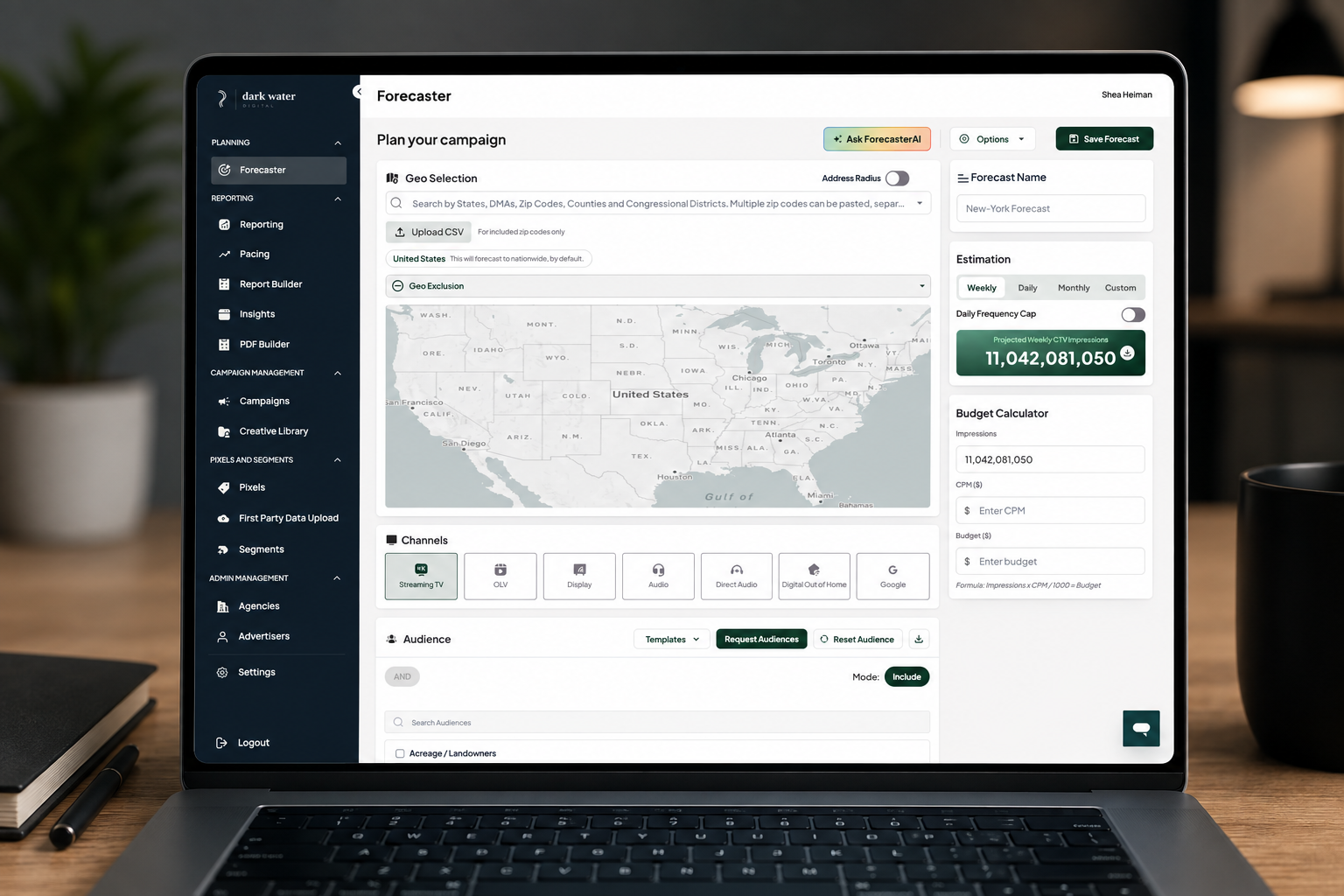
A local media plan starts with a map, not a channel list. We define the area worth winning, decide which screens and speakers reach those households, and set frequency high enough to be remembered without wasting a dollar outside the boundary. Then we measure visits, calls, and sales, and adjust. Explore the full programmatic media channels we buy, or read how attribution and marketing insights close the loop.

Geofencing and location targeting

Virtual boundaries around competitors, events, job sites, and high-intent destinations, plus re-engagement of everyone who walked through them.

Neighborhood-level audience building

Households selected by ZIP code, drive time, service area, and behavior, so the plan matches the map your business actually serves.

Cross-channel local reach

Connected TV, online video, display, digital audio, YouTube, podcasts, and digital out-of-home, coordinated under one local media strategy.

Multi-location and franchise rollups

Brand-consistent creative at the top, flexible local execution underneath, and reporting that rolls up by location or region.

Foot traffic attribution

Store visit measurement that ties ad exposure to people walking through your door, not just impressions served.

Continuous local optimization

Budgets, radii, dayparts, placements, and creative refined week over week as real behavior in your market comes in.

Geo-targeting map view

Who local programmatic works best for

Any business whose customers come from a defined area: law firms competing in one metro, dealer groups conquesting nearby lots, home service contractors covering a drive-time radius, colleges recruiting from feeder regions, and franchises coordinating dozens of locations. See how we apply this by category on our industries we serve page, or walk through our six-step process.

Local programmatic advertising questions, answered

What is local programmatic advertising?

Local programmatic advertising is the automated buying of digital ads, such as connected TV, online video, display, digital audio, and digital out-of-home, aimed at a defined geographic area rather than a national audience. Instead of paying for impressions across the country, your budget is spent on the ZIP codes, neighborhoods, and drive-time radii where your customers actually live and shop.

How is geofencing different from standard geo-targeting?

Geo-targeting narrows delivery to a city, ZIP code, or radius. Geofencing draws a precise virtual boundary around specific buildings or places, such as a competitor's lot, a stadium, or a trade show, and reaches the devices that enter it. Those visitors can then be re-engaged with follow-up ads after they leave.

How small can a service area be?

We regularly run campaigns for a single storefront, a handful of ZIP codes, or a contractor's drive-time service area. Budgets are paced so that a smaller footprint means higher frequency against the right households, not wasted reach.

How do you prove local advertising worked?

We measure store visits with foot traffic attribution, track website visits and conversions from exposed households, and, where data allows, connect campaigns to offline sales. Reporting is written in plain English with the KPIs that matter to your business.

How much should a local business budget for programmatic?

It depends on the size of your service area, the channels involved, and how competitive your category is. We build the plan backwards from the outcome you need, then show what a realistic monthly investment looks like before anything launches.

Next step

Let's map your service area.

Tell us where your customers are and we'll build a geo-targeted media plan around them.